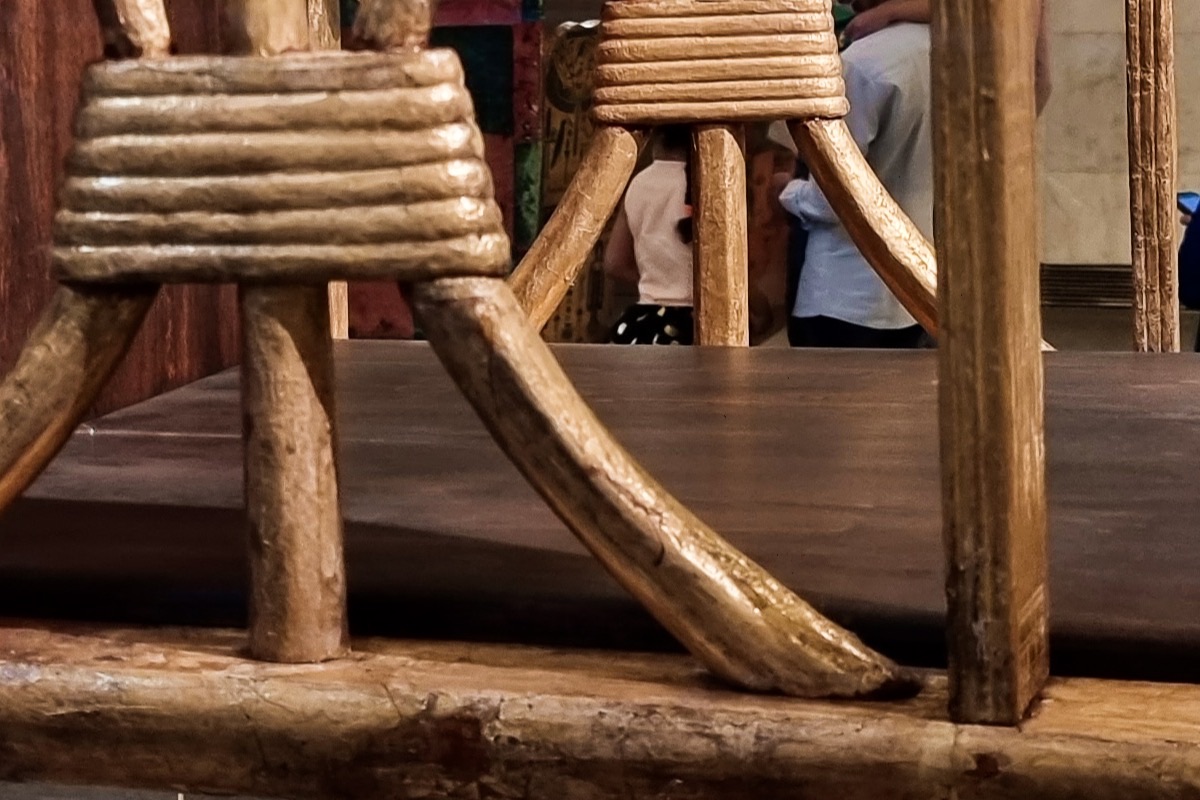
A museum object is often named by function: chair, jar, mirror, lamp. The noun can hide how many different users, occasions and settings the object passed through. Recovering use requires more than imagining someone holding it. Combine shape, wear, residues, scale, inscriptions and archaeological context, and keep the museum’s identification distinct from what you personally observe.
Begin with physical affordance
Ask what the object’s dimensions, balance, opening, handles and edges make physically possible. A vessel can pour, store or measure differently depending on neck and base; a chair organizes posture as well as status. Affordance is not proof of actual use, but it narrows the question. Note actions the form supports before choosing the one named on the label.
Read wear direction
Polish, scratches, rounding, dents and repairs can record repeated contact. Their location matters more than the mere presence of damage. Compare high points with protected recesses and one side with the other. Burial, excavation and cleaning also alter surfaces, so avoid calling every abrasion use-wear. Technical study may be needed to separate the stages.
Ask who could access it
Ownership, use and viewing are not identical. A prestigious object might be handled by attendants, seen by guests or activated only in ritual. Scale, storage, architectural context and inscriptions can indicate restricted or shared access. Do not turn an elite burial into a transparent picture of ordinary life; compare with settlement evidence and less formal materials where available.
Restore missing contents carefully
Empty containers once held food, cosmetics, oils, pigments, documents or offerings, but form alone may not identify contents. Residue analysis, labels, associated finds and textual evidence strengthen a claim. Museum displays sometimes place related materials nearby; check whether the grouping is archaeological or comparative. Phrase reconstructions as evidence-based possibilities, not sensory storytelling.
Include maintenance
Cleaning, sharpening, restringing, patching and replacing parts belong to use. A repaired chair or resharpened blade may have a longer practical biography than an untouched display suggests. Maintenance can show value, scarcity and available skill. Distinguish ancient intervention from archaeological assembly and modern conservation using labels or technical records.
Compare ceremonial and ordinary action
Ceremonial objects can use familiar forms while changing material, scale or accessibility. A model tool, offering vessel or ceremonial chair does not necessarily perform exactly like an everyday counterpart. Compare both form and context. The differences may reveal how ordinary action was represented, transformed or reserved for a particular institutional setting.
Avoid the single owner
Names and titles on an object may identify a commissioner, recipient, donor or commemorated person rather than everyone who made, moved, cleaned or used it. Write “named for” or “associated with” when that is what the evidence supports. A biography can include several relationships without forcing them into modern private ownership.
Build an action chain
Record five verbs the object’s evidence supports—such as carried, opened, poured, repaired and stored—and attach one visible or documented clue to each. Cross out any verb that relies only on genre expectation. The remaining chain will be less cinematic but more useful, and it will show exactly where a later source could add detail.
Test scale against the body
Estimate how hands, posture, reach and movement relate to the object without touching or crossing the barrier. Handles too small for a full grip, a seat at an unusual height or an opening difficult to refill may complicate the functional name. Scale can indicate model, votive version, child use, restricted handling or a different action, but none follows automatically. Record measurements from the label and compare with documented examples.
Place images beside surviving objects
Scenes and texts can show vessels, furniture, clothing or tools in action, yet images follow conventions and may stage ideal behaviour. Use them to generate questions about grip, orientation, contents and participants, then return to wear, context and dimensions. Agreement between sources strengthens an interpretation; disagreement is equally valuable because it may separate symbolic representation from ordinary practice or reveal that a museum category contains several forms of use.
Keep ancient date, modern discovery date, treatment date and visit date on separate lines. Chronology is the structure, not decoration.
Primary sources reviewed 29 July 2026: Egyptian Museum ↗ · NMEC ↗. Displays and visitor conditions may change.