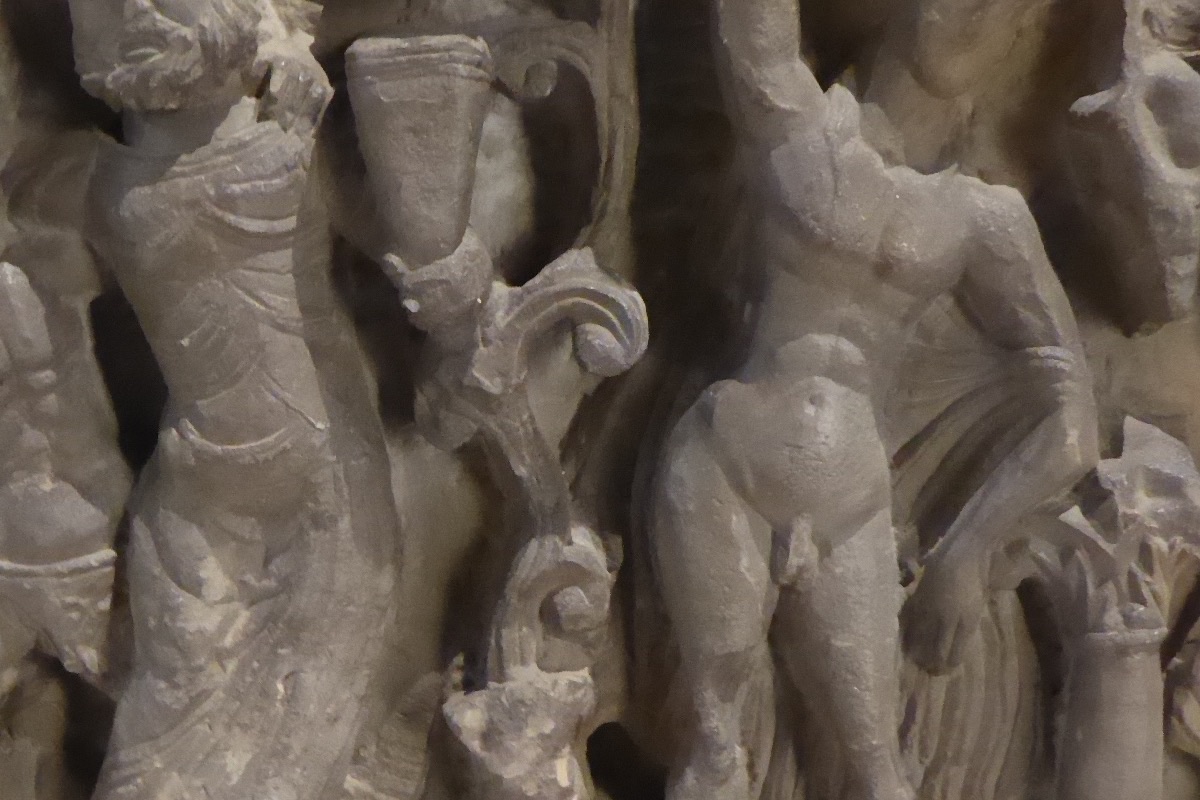
Reuse is not one process. A block can be built into a later wall, a statue reinscribed, a vessel repaired for another purpose or an architectural form adapted in a new religious setting. The second life may preserve earlier material while changing its visibility and meaning. Read what remains from each phase without treating the later one as contamination.
Identify the physical intervention
Look for recutting, erased names, new inscriptions, trimmed edges, blocked openings, drilled holes and surfaces exposed by a later break. Describe the alteration before assigning a date or motive. Some changes occurred during original production or modern restoration, so rely on labels and archaeological records when dividing phases.
Separate reuse from continuity
A familiar motif or technique can persist without an older object being physically reused. Conversely, reused stone may be hidden and valued mainly as building material. Ask whether the evidence concerns material, form, image, language or practice. The distinction prevents a vague claim of continuity from replacing a documented relationship.
Keep both settings visible
Write the original setting and later setting on separate lines. A temple block placed in a later foundation works differently from an image recarved in public view. Maps and architectural plans can show orientation and accessibility. Do not allow the more famous ancient phase to erase the later building that preserved or transformed it.
Ask what remained legible
Later users may have recognized an image, inscription, material quality or only the convenient size of a block. Visibility, literacy and cultural knowledge vary. Avoid assuming complete understanding or deliberate hostility. Evidence for targeted erasure is stronger when names or figures are selectively altered within a broader pattern.
Treat adaptation as production
Reworking requires choices, labour and new skill. A carved capital or architectural element can combine inherited forms with contemporary design rather than merely copy an older style. Look for new proportions, tools, joins and placement. The adapted object belongs to the history of making as well as reuse.
Notice administrative reuse
Excavation numbers, collection labels and museum mounts give objects new institutional functions. These modern additions differ from ancient reuse but also shape identification and movement. Do not remove them from photographs or notes. A small inventory mark can connect the visible object to an archive more securely than a descriptive title.
Avoid decline narratives
Later work is often described as less refined when it departs from an earlier canon. Replace that ranking with questions about audience, material, workshop, scale and intended effect. Different carving depth or proportion may respond to new architecture and viewing conditions. Comparison should explain change rather than turn chronology into a quality ladder.
Write a two-phase label
Draft two short labels: one for the object’s earliest documented phase and one for its later use. Give each a date range, place, action and evidence. Add a third line explaining what remains uncertain. The exercise prevents one phase from monopolizing the biography and reveals which transition requires further research.
Follow orientation and scale
Reuse often turns a former front into a side, underside or hidden core. Note which surface faces the later viewer, whether the object was cut to a new module and which earlier features remain accessible. Rotation may be practical, protective or interpretive. A plan or reconstruction can show this more clearly than a museum fragment. Describe the spatial change first, then ask what later builders or users could actually recognize.
Compare repair with transformation
Repair aims to continue some earlier function, while transformation creates a substantially different one, but the boundary is not always clean. A vessel with a new handle may preserve use; a cut vessel built into architecture changes setting and action. Record what was retained, added and removed. This three-part comparison makes the second phase visible without requiring a single motive such as economy, reverence or rejection.
Keep ancient date, modern discovery date, treatment date and visit date on separate lines. Chronology is the structure, not decoration.
Primary sources reviewed 29 July 2026: Coptic Museum ↗ · Museum of Islamic Art ↗. Displays and visitor conditions may change.