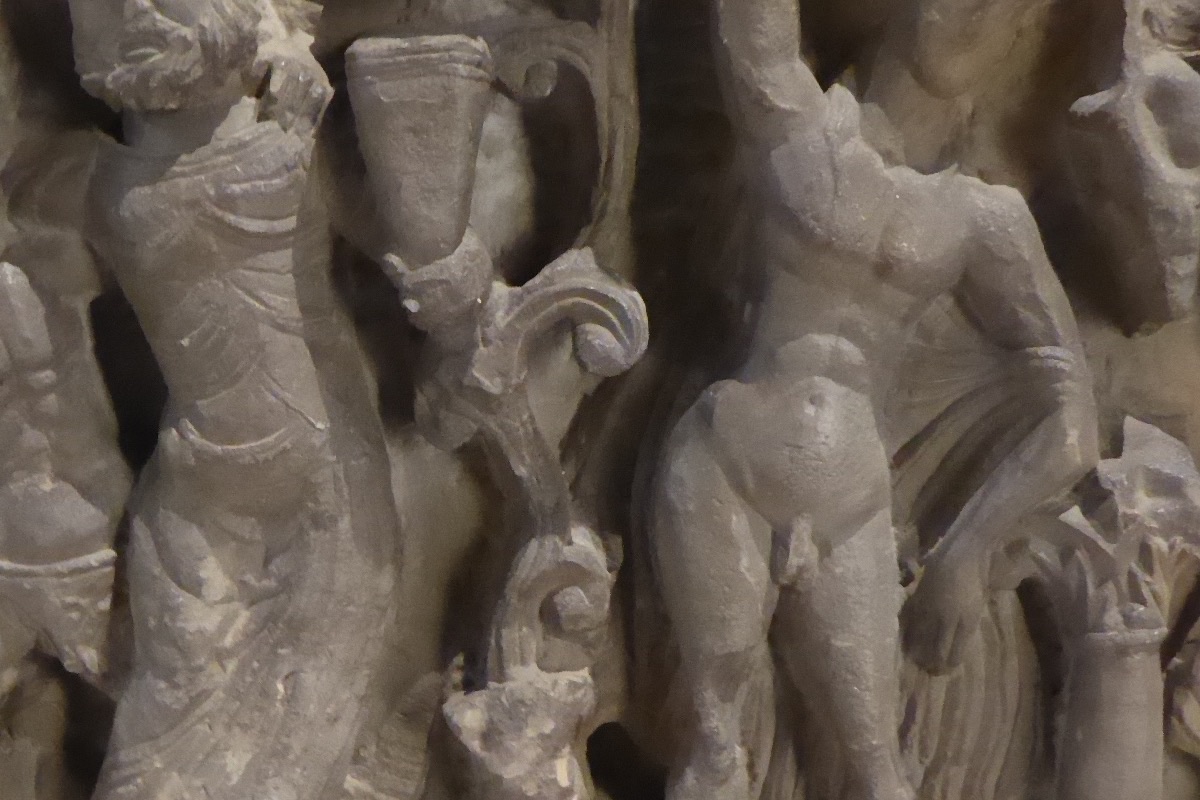
A place guide should protect attention and document relationships, not promise a fixed checklist. Use the route below with current museum information.
Begin with an urban sequence
Alexandria’s ancient Egyptian, Hellenistic, Roman, late antique, Islamic and modern histories overlap in a continuously inhabited city. At the Alexandria National Museum, follow one material or social practice across galleries rather than treating each period as a sealed culture. Mark where the display uses floor, colour or architecture to signal transition.
Keep precise provenance
A label naming Alexandria may refer to a cemetery, sanctuary, house, submerged context or broad collection history. Copy the most precise term and every qualifier. Dense modern occupation and coastal change make archaeological position especially important; a city name alone cannot restore it.
Read languages as situated evidence
Hieroglyphic, Demotic, Greek, Latin, Coptic and Arabic inscriptions belong to different supports, audiences and institutions. They do not form a simple replacement chart. Locate text on the object, identify the language from the museum source and ask who could encounter it. Translation is a modern interpretive stage too.
Use the sea as a documented route
Imported material and forms connect Alexandria to Mediterranean and Nile networks, but resemblance alone does not prove direct trade. Look for cargo context, production analysis, inscriptions and published provenance. Underwater discovery also creates specific conservation demands that shape current display.
Treat portraits as biographies, not identities
Faces encourage immediate recognition. Compare material, scale, style, inscription and original setting before assigning ethnicity, personality or social status from appearance. A funerary, domestic or public portrait performed a different role, and its modern museum presentation adds another frame.
Include the museum building
A historic residence or modern gallery directs circulation, controls light and divides chronological periods. Architecture affects what can be displayed and how the city presents its past. Record one building choice beside one object choice to keep the present institution in view.
End with a layered citation
Choose three objects from different periods and record inventory number, findspot, ancient date, discovery route and visit date. Connect them only through evidence the museum supports. The resulting gaps are more instructive than a seamless tourism narrative.
Treat submerged context as stratigraphy
An underwater find is not simply a dramatic object recovered from the sea. Position, sediment, associated architecture, recording method and recovery date determine what can be argued. Conservation begins immediately because salts and drying create new risks. When a display reconstructs a submerged setting, distinguish measured archaeological relationships from atmosphere, and use the project or inventory reference to follow the documented context.
Compare city, cemetery and collection
Select one object from an urban or domestic context, one from a funerary setting and one with a broad or uncertain provenance. Compare what each can support about Alexandrian life. The objects may share period or style while preserving very different evidence. Keeping those contexts separate resists the temptation to turn a diverse, long-lived city into a single seamless cultural portrait.
Record museum, gallery, inventory number and observation date before leaving the case.
Official sources reviewed 29 July 2026: Alexandria National Museum ↗ · Bibliotheca Alexandrina Museums ↗. Visitor conditions may change.